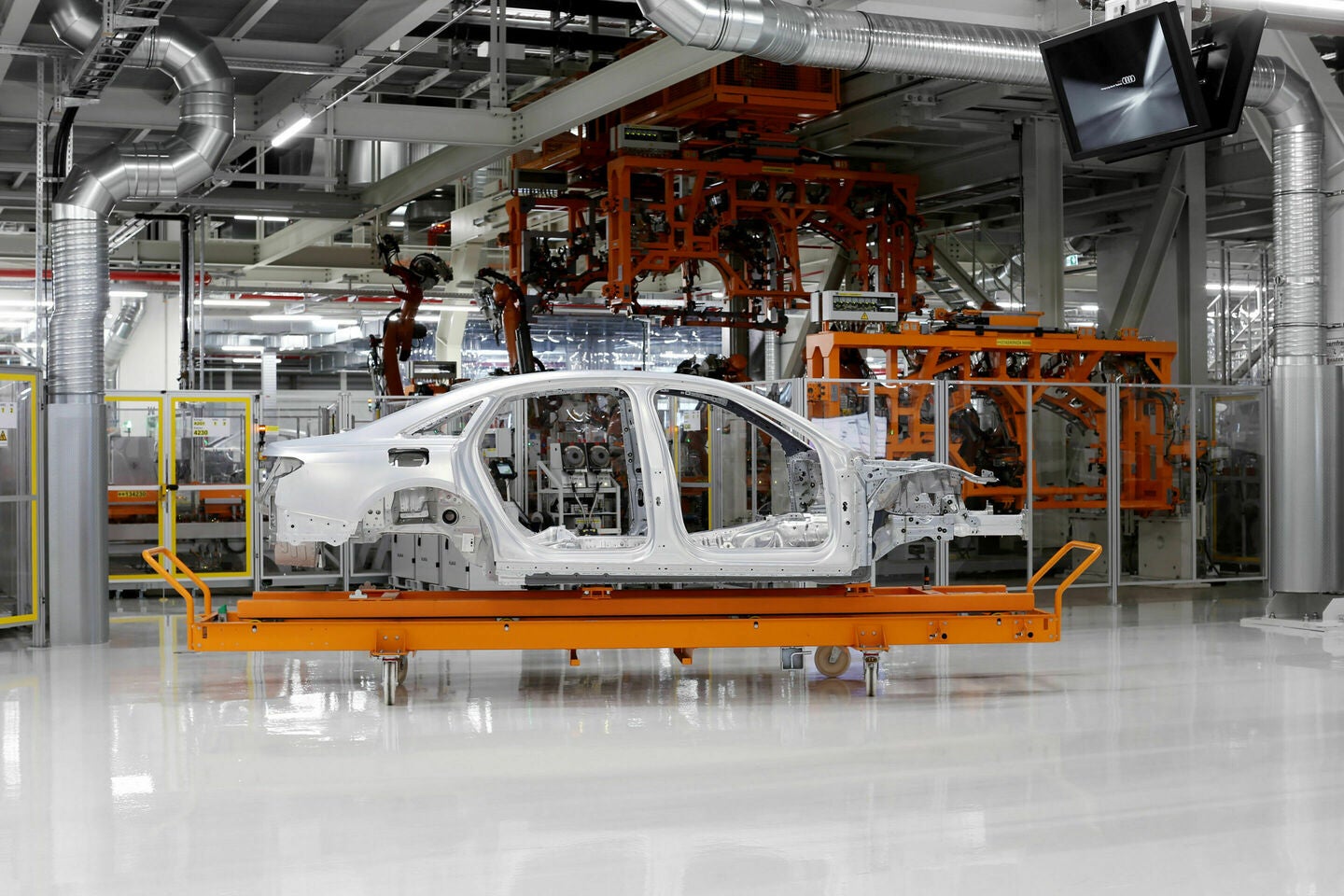
Body Shop and Technology

We shape the future of body construction within the Volkswagen Group – from planning complete production systems and ensuring manufacturability to providing technological support for mechanical joining processes. Our portfolio also includes the development and evaluation of function-specific materials.

Body Shop Planning
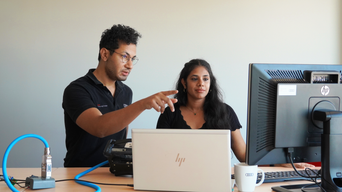
Production-Oriented Product Influence

Our work begins even before system planning: Through early analysis of production-relevant characteristics – such as joining positions, directions, edge distances, flange overlaps, stackability, and material properties – we lay the foundation for cost-effective manufacturing. We develop Reference Point System (RPS) concepts and coordinate them across departments. This results in a functional dimension catalog that incorporates requirements from development, production, and quality assurance. This approach enables our customers to reduce the need for complex joining tools and lower investment costs – ensuring efficient processes right from the start.

Planning of Plant Concepts​

We develop holistic production structures and plan the processes for body shop systems with a focus on efficiency, flexibility, and future viability. Using modern planning tools such as MicroStation/HLS and ProcessDesigner, we create detailed system layouts that meet both production requirements and local conditions. In doing so, we evaluate various concept variants and compare their technical and economic feasibility – always aiming to find the best solution for the specific requirements of our customers.

Planning of Spare Parts and Components Manufacturing​

Even after the official end of production (EOP), we ensure that spare parts and components for body and vehicle parts can be reliably manufactured. We plan the corresponding manufacturing processes, create precise specification documents and tender materials, and support the technical awarding process. Throughout the entire project implementation, we provide technical support – ensuring smooth execution and the highest quality in post-series supply.

Additional services

Creation of Specification Documents and Procurement Support

We create precise specification documents and tender materials, support the technical awarding process, and assist with implementation through to realization. This establishes a clear foundation for efficient projects within the Volkswagen Group.

Coordination of plant realization

From setup to final acceptance, we take over the coordination of system implementation. We manage suppliers, handle schedules and changes, and ensure a smooth process through our on-site presence – structured, efficient, and goal-oriented.

Project Management​

We are responsible for the complete project execution – from concept planning to SOP + 3, as well as spare parts manufacturing after EOP. The focus is on schedule, quality, and process targets – ensuring reliable implementation within the Group environment.

Technology Development
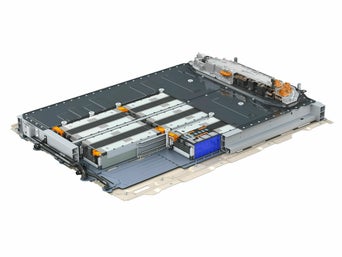
Material and Process Development of Polymer Systems within the HV Battery

We develop and validate thermal interface materials such as thermally conductive gap fillers and thermal adhesives that enable efficient heat dissipation within the HV battery. In addition, we offer comprehensive testing methods – including tensile, tensile shear, compression, and 3-point bending tests, as well as squeeze flow tests, also in combination with aging investigations.

Validation and Development of Mechanical Joining Techniques

We validate various material thickness combinations using joining techniques such as HSN, FDS, clinching, WPS, stud welding, and button welding. In addition, we develop innovative joining technologies for die-cast components and functional elements that meet the highest standards of quality and reliability.

Product and Process Influence – Adhesive Joining

We support vehicle projects throughout all digital development stages in the area of body shop adhesives. In doing so, we evaluate thermal distortion simulations, identify critical adhesive joints, and develop targeted optimization measures. The effectiveness of these measures is validated through follow-up simulations and destructive testing on the body.

Additional Services in Technology Development

Analytics

Our analytical methods enable precise evaluation of flow properties, curing behavior, and storage stability of materials – including oscillation and rotational rheology. Using Differential Scanning Calorimetry (DSC), we analyze the degree of crosslinking, activation energy, kinetics, and pre-curing of polymer systems.

Mechanical Joining Technology

We support and evaluate joining-related requirements along project milestones to ensure timely implementation. Our services include the structured processing of joining data as well as execution of the material approval process (WFP) – with the goal of ensuring the highest quality and reliability in joining technology.

Surface Measurement of Formed Parts and Sheets

We develop and operate a robot-controlled 3D measuring system for lubricant analysis on sheet metal surfaces using infrared technology (AMEPA) to precisely assess surface quality and consistency. In addition, we conduct standardized test series on aluminum and steel sheets to systematically characterize forming and crash-relevant properties.

Your direct contact to us

„Our expertise is your advantage“

- Michael Bauer


Head of Body Construction & Technology Development

E-Mail

LinkedIn


Loading..